Charades & Headbands: Guess Up
- 4.5
- Rating
- 10.00M
- Installs
- Free
- Price

 Analysis by App-foxy
I installed Charades & Headbands: Guess Up expecting a quick party distraction, and that is exactly where it makes its best first impression. It is a free word game from Cosmicode built around guessing prompts while friends act, explain, or react under pressure. The idea is immediately understandable, so nobody needs a long tutorial before joining in. In my experience, that low entry barrier matters more than elaborate presentation when a game is being passed around at a family gathering or opened during an awkward few minutes at a party.
The app has the kind of energy that works best when several people are already in the same room. One person holds the phone, the others try to communicate the displayed word, and the group naturally creates its own jokes around mistakes. I found it more successful as a social activity than as a solo word challenge. If you want something to play quietly by yourself, this probably should not be your first choice. If you want a simple excuse to get people talking, it has a strong case.
Its broad reach is easy to understand: the game is free, carries an Everyone age rating, and has passed 10 million installs. It holds a 4.5 average rating from around 40 thousand ratings, which fits my impression of a polished, accessible party title rather than a niche word puzzle. The current version is 4.3.16, and it runs on Android 7.0 or later, so many older devices can still take part.
You May Also Like

 Pandora - Music & Podcasts
Pandora’s Music Is Easy to Start, but Harder to Recover
Pandora’s strength is its low-effort path from a seed to a station. Its weak spot is how much confidence it asks you to place in connection, setup, and quiet recovery.

 8 Ball Pool
 Is Built on Rivalries, Rematches, and Routine
A close look at the rivalries, rematches, shared routines, and unanswered safety questions that turn a quick pool match into a persistent mobile community.

 Samsung Music
’s Quiet Strength Is Playing What You Already Own
Its reach comes less from spectacle than from dependable access to a personal library. That simplicity is both the app’s strongest retention engine and its ceiling.

 AccuWeather: Weather Radar
AccuWeather Review: A Quick, Clear Forecast for Everyday Decisions
For everyday plans, the best forecast is the one you can understand quickly. AccuWeather makes rain timing, radar, and local conditions easy to act on, with a few trade-offs.

 Hill Climb Racing
Why Hill Climb Racing Still Turns Crashes Into One More Run
A tiny car, a bumpy hill and one more upgrade: Hill Climb Racing keeps resurfacing because its simple chaos makes every near-miss feel personal.

 AliExpress - Shopping App
AliExpress Makes Global Shopping Feel Personal, but Shoppers Bear the Risk
AliExpress turns a global marketplace into a pocket-sized discovery engine. Its reach is useful, its shopping loop compelling, and its trade-offs easy to miss.
More From Our News Desk
View All News


Why the first week feels so easy
The first few sessions are carried by discovery. Even familiar prompts become funny when someone interprets them in an unexpected way, and the phone creates a clear focus for the room without demanding that everyone learn complicated rules. I liked that the game can be introduced almost conversationally: hand over the device, explain the basic goal, and start. That makes it particularly useful when the group includes children, grandparents, casual players, or friends who normally avoid games.
A realistic use case is a family dinner that finishes earlier than expected. Rather than asking everyone to install a complicated multiplayer title or divide into teams with a rule sheet, one person can bring out this game and let the room learn by playing. The strongest moments come from the people involved, not from the app trying to dominate the evening. That is a compliment, because a party game should provide structure while leaving room for personalities.
I also found the format useful for breaking up a gathering where not everybody knows one another. A guessing prompt gives people something specific to respond to, which is easier than forcing small talk. The game can work with mixed ages because the basic action is visual and social. Still, the experience depends heavily on the group. Quiet players may feel exposed, and anyone uncomfortable with acting or being watched may prefer a turn-light card game.
The first-week appeal also comes from the short-session design. You can play for a few minutes, stop when food arrives, and return later without treating the activity like a serious commitment. That flexibility is more valuable than it sounds. Many mobile games ask for repeated attention, but this one fits around the occasion. I would keep it installed before a holiday visit, a sleepover, or a casual get-together because it is more useful when already available than when somebody has to search for an activity in the moment.
How I would set up a better session
My first practical tip is to decide the mood before starting. With younger players, keep the pace relaxed and allow explanations when a prompt is unfamiliar. With competitive adults, establish turns quickly and avoid pausing to debate every interpretation. The game itself supplies the spark, but the host still controls whether the room feels welcoming or frantic.
A second useful habit is to rotate the phone holder instead of leaving it with the most confident player. That prevents the session from becoming a performance by one person and gives quieter participants a more comfortable way to join. It also changes the rhythm, because each player brings a different style of acting and explaining. This is one of the app’s less obvious strengths: the same prompts can feel different depending on who is under pressure.
I would also avoid launching it immediately after a long, intense board game. The guessing format works best as an opener, a palate cleanser, or a closing activity. Used at the right point, it fills a social gap. Used as the only entertainment for an entire evening, it can reveal its limits much faster.
What remains useful after the novelty fades
The more important question is whether Charades & Headbands: Guess Up earns permanent space on a phone. My answer is qualified. It has recurring value when your routine includes gatherings, but it is not a daily habit game for most people. Its usefulness is event-based: you remember it when friends arrive, when a family needs an easy group activity, or when a trip produces a few idle moments.
That is not a weakness by itself. Some apps are valuable because they are dependable on specific occasions rather than because they demand daily attention. This title belongs in that category. I would not open it every morning, but I can imagine keeping it installed for months because it solves a recurring social problem: what can everyone do together without preparation?
The novelty lasts longer when the group changes. A set of friends may exhaust the funniest possibilities quickly, while a family that plays only during occasional visits can return to it with fresh enthusiasm. The game’s replay value therefore depends less on personal progression and more on the people around you. That makes it a better shared tool than a private collection of challenges.
There is also a useful distinction between repeatability and depth. The game can be replayed, but it does not necessarily offer the layered strategy, long-term mastery, or personal achievement that keeps a traditional word puzzle compelling. If your preferred alternative is a crossword, a spelling challenge, or a competitive vocabulary game, you may find this experience lightweight. Its goal is laughter and participation, not sustained intellectual advancement.
Who gets the most value from it
I would recommend it most strongly to households that regularly host mixed-age groups. It is also a good fit for friends who want a game that can be explained in seconds, and for people looking for an inexpensive backup activity. Since the download is free, it is easy to try without making the group commit money before knowing whether the format suits them.
The free model does deserve attention, though. In-app purchases range from $1.99 to $49.99 per item, so I would treat optional spending carefully, especially if children are using the phone. The basic appeal should be judged before buying anything. A paid add-on may make sense for someone who plays often and wants more variety, but occasional players should be perfectly comfortable starting with the free experience and seeing whether it becomes part of their routine.
I would skip it if you need a strong single-player mode, deep progression, or a game that rewards careful planning. I would also look elsewhere if your group dislikes acting, speaking loudly, or being put on the spot. No amount of polish can remove that social requirement. A turn-based word puzzle or cooperative board game will be a better fit for people who prefer thinking privately before responding.
Where the maintenance burden appears
At first, the maintenance burden seems low because there is little to organize. You do not need a table full of pieces, a score pad, or a complicated setup. The phone is the central object, so the practical preparation is minimal. That is a genuine advantage over physical charades, where someone has to prepare prompts or find suitable cards.
Over time, however, the human maintenance becomes more noticeable. Someone still needs to choose when to play, explain the format to newcomers, manage turns, and notice when the group is tiring. The app cannot solve a bad social fit. If the host keeps pushing after the room has stopped laughing, the game can quickly feel repetitive. I learned to treat it as a flexible activity rather than a program for the whole night.
Device logistics can matter too. The holder needs to keep the screen visible to the right person without accidentally revealing the prompt. In a crowded room, people may stand too close, and the holder may become distracted by reactions. A simple arrangement helps: give the active player a clear spot, keep the phone at a comfortable angle, and pass it promptly after each turn. These small choices make the experience feel smoother than simply opening the app and hoping the room organizes itself.
Because this is a mobile game, I would also check the device before a planned gathering. A nearly empty battery, a dim screen, or a phone that keeps receiving notifications can interrupt the flow. That is not unique to this title, but it matters more here because the whole group depends on one screen. The best preparation is modest: charge the phone, silence distractions, and decide who will start.
Why the format can become tiring
The main source of fatigue is predictability. Once players understand the rhythm, the surprise of the first session naturally declines. The same social mechanics that make the game easy to learn can also make it feel familiar quickly. There is no long learning curve to keep revealing new systems, so the group has to supply variety through different players, settings, and styles of play.
Another issue is uneven enthusiasm. One person may love acting while another gives minimal clues and waits for the turn to end. That difference can make the game feel unfair even when the rules are functioning normally. I found that short rounds and rotating roles help, but they do not eliminate the problem. The app is strongest with a group that already wants a playful, expressive activity.
Noise and audience size can create additional friction. In a large gathering, several conversations may compete with the active player, making clues harder to hear. In a very small group, there may not be enough energy to sustain the jokes. The sweet spot is a group large enough to react but small enough for everyone to follow the turn. When the room does not match that shape, a quieter game may be more enjoyable.
There is also a difference between funny failure and frustrating failure. A missed prompt can produce the best laugh of the evening, but repeated confusion can make players feel that they are losing for reasons unrelated to skill. I recommend treating the score as a loose excuse for competition rather than the central objective. That mindset preserves the social value and makes the game more forgiving for children or occasional players.
How it compares with familiar alternatives
Compared with traditional charades, this app removes the need to prepare a stack of prompts. That makes it faster to start and easier to carry, while physical charades can feel more personal because the group creates or chooses the material. If you enjoy inventing categories and tailoring every clue to your friends, paper cards may offer more control. If you want convenience and a ready-made structure, the app is more practical.
Compared with headband-style guessing games played with physical cards, the phone is less tactile but more compact. You do not need to keep a box of cards nearby, and the device can become the shared game object immediately. The trade-off is that a screen can feel less natural at a social gathering than cards on a table. I would choose this title for spontaneous play and physical cards for a planned game night where presentation and table interaction matter.
Compared with word puzzles and quiz apps, the emphasis here is not on individual knowledge. A player can contribute through gestures, timing, creativity, or a funny interpretation even without an impressive vocabulary. That makes it more inclusive in one sense, but less satisfying for someone who wants a measurable test of language ability. The best alternative depends on whether your group wants conversation and performance or quiet problem-solving.
Compared with larger multiplayer games, it asks much less from the participants. There is no need to coordinate accounts, learn a complex interface, or wait for everyone to understand a digital world. That simplicity is why I would keep it as a backup. The cost is limited depth: after the group has had its laughs, there may be little reason to continue immediately.
My long-term verdict
Charades & Headbands: Guess Up earns lasting space if you think of it as a social utility rather than a game you must play every day. Cosmicode has made the central experience approachable, quick to explain, and easy to fit around real gatherings. Its free entry, Everyone rating, and support for Android 7.0 or later make it accessible to a broad range of players, while its popularity suggests that the format has connected with many people.
My recommendation comes with clear boundaries. Keep it installed if you host friends, spend time with family, or regularly need a low-preparation group activity. Try it before a gathering and decide who will manage turns so the session starts smoothly. Be cautious with optional purchases, particularly when the phone is shared with children, and do not expect the app to replace a deeper word game or a carefully designed board-game night.
The lasting value is not endless content; it is dependable timing. This is the app I would reach for when conversation needs a nudge, when a mixed group wants something everyone can understand, or when a planned activity falls through. It may not survive every week of heavy use without feeling repetitive, but it does not need to. Its real strength is being ready when people, rather than the screen, are the main event.
FAQs for Charades & Headbands: Guess Up
01What is Charades & Headbands: Guess Up?
Charades & Headbands: Guess Up is an engaging party game app that challenges players to guess words or phrases based on clues from teammates. It’s ideal for gatherings, offering a variety of categories to choose from, making it a fun and interactive way to enjoy time with friends and family.
02How do you play Charades & Headbands: Guess Up?
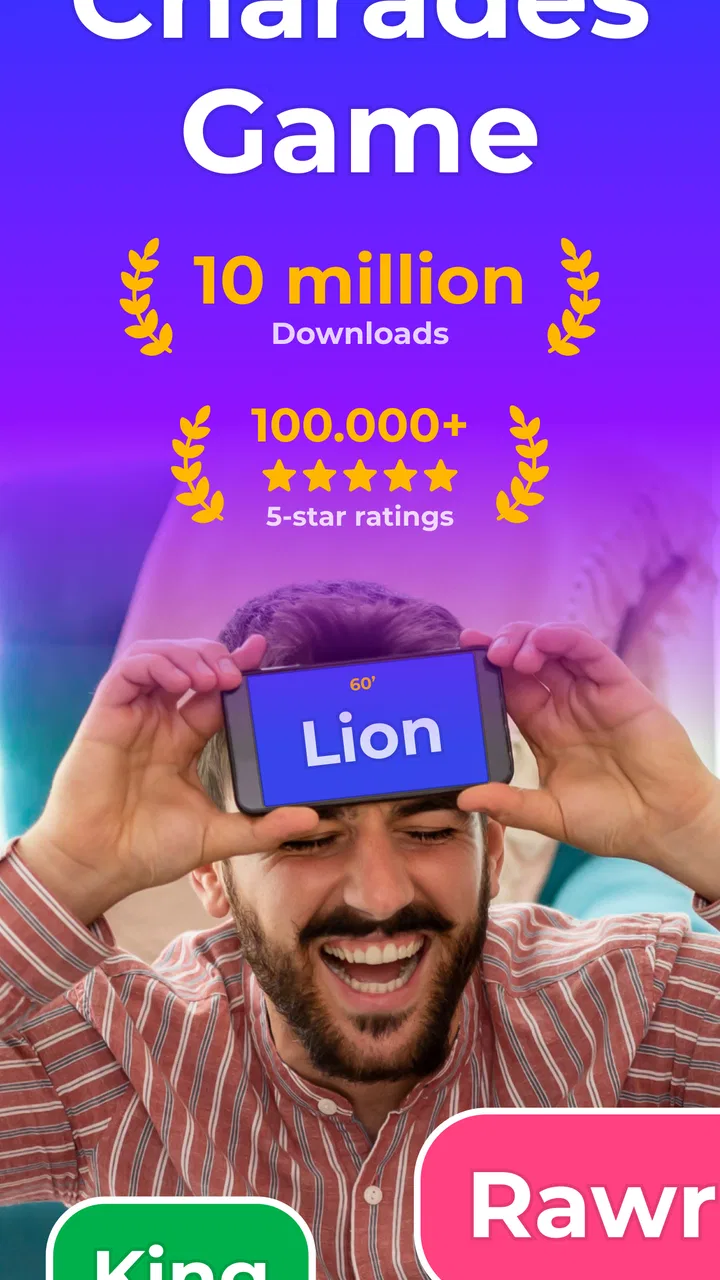
To play Charades & Headbands: Guess Up, one player holds the device to their forehead displaying a word. Teammates provide hints to help the player guess the word within a time limit. The game offers multiple categories and can be played with two or more participants, creating lively entertainment.
03Is Charades & Headbands: Guess Up free to download?
Charades & Headbands: Guess Up is available for free download on both Android and iOS platforms. While the basic version includes several categories, there are in-app purchases available that offer additional features and categories for a more varied gameplay experience.
04Can Charades & Headbands: Guess Up be played offline?
Yes, Charades & Headbands: Guess Up can be played offline, making it convenient for use in locations without internet access. However, some features, like downloading new categories or updates, may require an internet connection. This offline capability adds to its versatility as a party game.
05What age group is suitable for Charades & Headbands: Guess Up?
Charades & Headbands: Guess Up is suitable for players of all ages, though it is recommended for ages 12 and up due to the complexity of some words. The app includes a variety of categories, some of which are designed to be family-friendly, ensuring fun for both younger audiences and adults.
Pros
- Engaging multiplayer mode enhances fun.
- Wide variety of categories to choose from.
- User-friendly interface for easy navigation.
- Regular updates with new content.
- Customizable game settings for personalization.
Cons
- Ads can interrupt gameplay occasionally.
- Limited offline functionality.
- Some categories require in-app purchases.
- Graphics are simple
- not visually stunning.
- Sound effects can become repetitive.

Charades & Headbands: Guess Up
Gallery